

Learn how an MRI injector improves MRI scanning with safe, precise contrast delivery. Tips for clinicians and patients using MRI power injectors.
Magnetic Resonance Imaging (MRI) is one of the most powerful diagnostic tools in modern medicine. Its ability to produce high‑resolution images without ionizing radiation makes MRI scanning invaluable for diagnosing a wide range of conditions, from neurological issues to soft tissue injuries. Yet, to fully leverage the capabilities of MRI, especially for contrast‑enhanced exams, hospitals and imaging centers rely on a specialized device: the MRI injector.
In this article, we’ll explore how MRI injectors work, the environment in which they operate, best practices for clinicians and patients, and key safety considerations when using a MRI power injector in clinical settings.
What Is an MRI Injector?
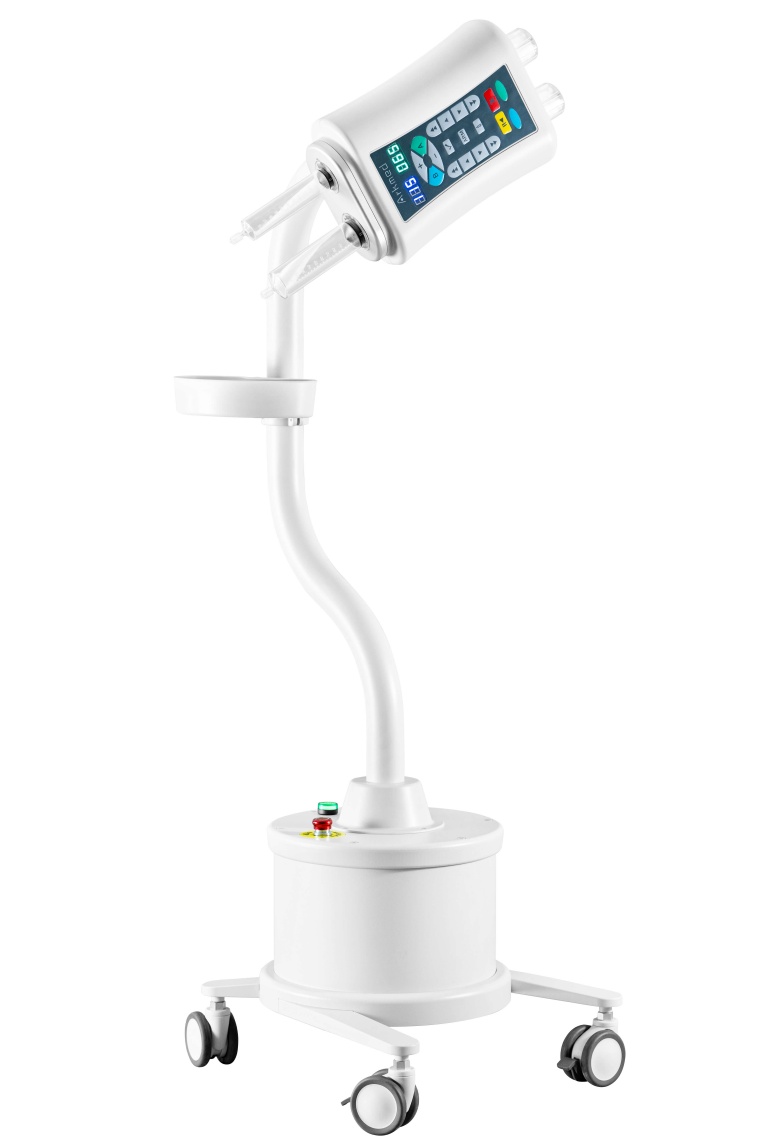
An MRI injector, or MRI power injector, is a medical device designed to deliver contrast agents into a patient’s bloodstream at precise flow rates and timing during an MRI scanning procedure. Contrast agents enhance the visibility of specific tissues, blood vessels, and abnormalities, improving diagnostic confidence. These injectors are engineered to operate safely alongside strong magnetic fields generated by MRI scanners.
Unlike manual injections, a power injector ensures consistent delivery speed and volume, which is crucial for dynamic imaging sequences and reproducible results. For clinicians, this means more reliable imaging outcomes and improved patient diagnostics.
How MRI Injectors Support Imaging Quality
The quality of contrast‑enhanced MRI scans depends on precise timing and controlled delivery of contrast media. MRI injectors help achieve this by:
Maintaining consistent flow rates that match the imaging protocols, ensuring contrast reaches target tissues at the right moment.
Allowing programmable injection protocols tailored to specific diagnostic needs, including multi‑phase studies.
Reducing variability between scans, which can improve image clarity and diagnostic reliability.
These capabilities make MRI power injectors especially valuable in complex exams such as brain, cardiac, and vascular MRI scanning.
Where MRI Injectors Are Used in Clinical Practice
MRI injectors are found in many healthcare environments where enhanced imaging is routinely performed, including:
l Hospitals and medical centers with dedicated MRI suites
l Diagnostic imaging centers specializing in advanced cross‑sectional imaging
l Research facilities studying disease progression or treatment response
l Outpatient clinics equipped for advanced diagnostic services
Because MRI suites involve powerful magnetic fields, specific controls and layouts are required to keep both people and equipment safe. This includes non‑magnetic injector components and careful separation between the MRI bore and injector controls.
Understanding the MRI Scanning Environment
MRI machines create strong static magnetic fields and time‑varying gradients to produce images. These fields can attract ferromagnetic objects, interfere with electronic implants, and pose safety risks if protocols are not followed.
Key aspects of the MRI scanning environment include:
l Static Magnetic Field: This is the main magnetic field generated by the MRI scanner. It can attract loose metal objects and interfere with metallic implants.
l Gradient Fields: These change rapidly during scanning and contribute to the detailed spatial encoding of MRI images.
l Radiofrequency (RF) Fields: Used to stimulate hydrogen nuclei, which then emit signals used to generate images.
All devices used near the scanner, including an MRI injector, must be compatible and tested to ensure they do not disrupt imaging or pose hazards.
Safety Considerations for MRI Injectors
Because MRI injectors operate close to powerful magnetic fields, several safety factors must be considered:
1. Magnetic Compatibility
Any injector used near an MRI scanner must be specifically designed or certified as MRI safe or MRI conditional. Components containing ferromagnetic parts can become dangerous projectiles in the magnet’s field if brought too close.
2. Monitoring and Patient Comfort
During contrast injection, technologists monitor the patient for any discomfort or reactions. Injection sites should be checked for signs of extravasation, and patients should be instructed to report pain or unusual sensations immediately.
3. Emergency Preparedness
MRI facilities must have clear protocols for managing emergencies. In the rare event of a medical emergency inside the MRI suite, improper use of non magnetic emergency equipment can complicate rapid response. Therefore, staff must be trained in MRI specific emergency procedures.
4. Staff Training
Operating a MRI power injector requires training not just in mechanical function, but also in MRI safety. Technologists must understand how to set up injection protocols, secure IV access, and work within the constraints of the scanning environment.
Preparing Patients for MRI Scanning with an Injector
From the patient’s perspective, preparation for a contrast‑enhanced MRI exam includes several important steps:
l Screening for Safety: Patients are asked about implants, metal fragments, or medical devices that may be affected by magnetic fields. Heart pacemakers, certain neurostimulators, and some older implants can pose risks.
l IV Access: A secure intravenous line must be established well before scanning begins to ensure smooth injection of contrast media.
l Instructions and Comfort: Patients should be informed about the noise, duration, and sensations they might experience during MRI scanning, and asked to remain still throughout the examination.
Best Practices for Using MRI Power Injectors
To maximize image quality and patient safety, healthcare providers should adopt several best practices:
l Regular Maintenance: MRI injectors should undergo periodic checks to ensure precision and reliability.
l Protocol Customization: Tailoring injection parameters to specific exams helps achieve optimal contrast enhancement.
l Patient Communication: Clear guidance before, during, and after the injection improves patient cooperation and comfort.
l Documentation and Review: Keeping accurate records of injection parameters and patient responses can help improve future imaging exams.
Looking Ahead: Innovation and Integration
MRI technology continues to evolve. Advances in both scanner design and injector systems aim to improve workflow efficiency, image quality, and patient safety. Some newer research explores injector performance even in ultra‑high field MRI environments, showing that high precision delivery can be maintained without compromising safety or imaging results.
As clinical demand grows, the integration of intelligent protocol management and upfront screening tools will play a greater role in helping facilities deliver consistent patient care.
Conclusion
The MRI injector is more than just an accessory to MRI scanning — it’s a critical component in delivering high‑quality, contrast‑enhanced diagnostic images. From precise contrast administration to patient safety protocols, understanding how these devices interact with the MRI environment helps clinicians deliver better care.
By focusing on safe operation, thorough training, and clear communication with patients, healthcare providers can leverage MRI power injectors to enhance diagnostic confidence and streamline imaging workflows.
Post time: Jan-20-2026